Great wayfinding is invisible — people navigate without thinking. Poor wayfinding costs businesses in lost customers. Here's the difference.
The goal of a wayfinding system is counterintuitive: when it works perfectly, nobody notices it. Visitors arrive at their destination without hesitation, without backtracking, and without needing to ask for directions. When it fails, you know it — confused looks, wasted minutes, the front desk fielding the same questions on repeat.
The Principles of Good Wayfinding
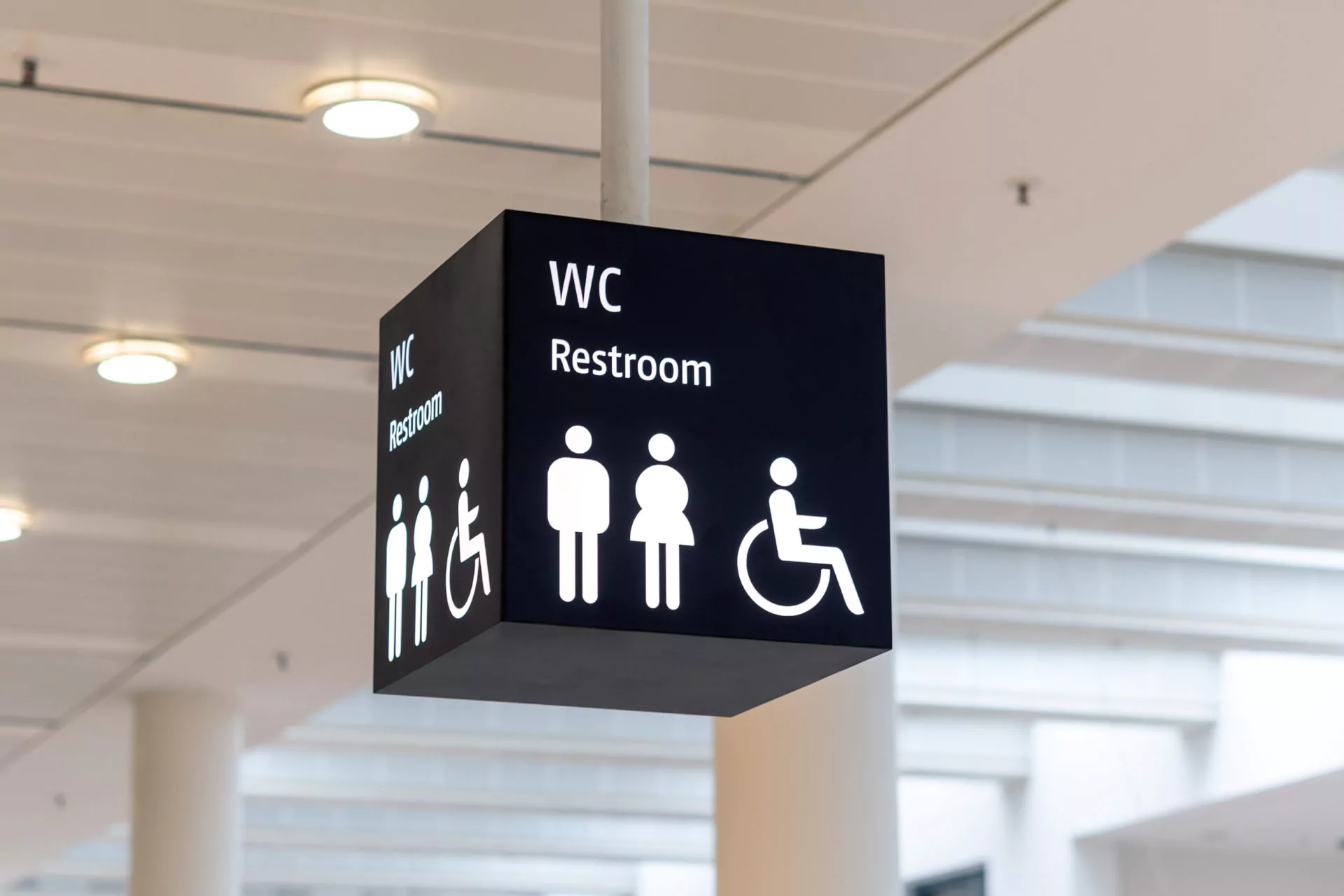
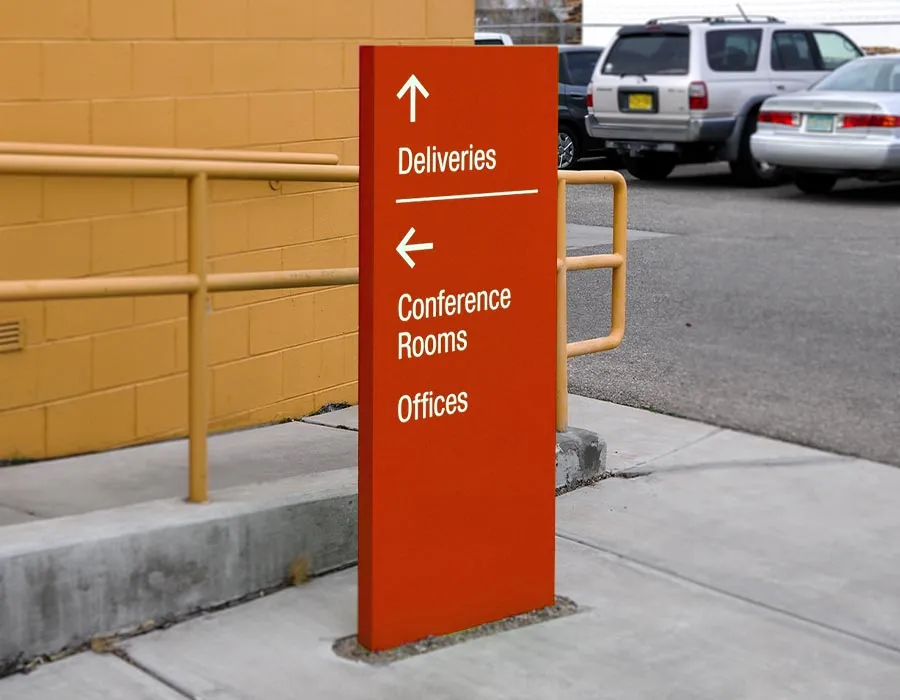
- Decision Points First: Place directional signs at every point where a visitor must choose between paths — never mid-corridor.
- Hierarchy of Information: Primary destinations (Reception, Emergency Exit, Car Park) must be visually dominant. Secondary information is subordinate.
- Consistent Visual Language: One typeface, one icon set, one colour system throughout.
- Confirmation Signs: After a turn, confirm the route. This single element dramatically reduces anxiety.
- Accessibility: WCAG-compliant contrast ratios (minimum 4.5:1), tactile elements for visually impaired users, and Braille for key signs.

The Most Common Mistakes
The most common wayfinding failure we see during site surveys is sign placement at the wrong height. Eye-level for a standing adult is 1.5–1.6m. Overhead suspended signs should be at a minimum 2.2m clearance. Signs installed at 1.8m are visible to tall adults but awkward for everyone else — and invisible for wheelchair users.
“A building with 50 poorly placed signs is harder to navigate than one with 15 perfectly placed ones. More is not better.
Directory Boards: The Anchor of Any Wayfinding System
Every multi-tenant building, hospital, and large commercial facility needs a directory board at its primary entrance. This single sign — showing all tenants, floors, and key destinations — is the first reference point for visitors and reduces directional sign redundancy throughout the rest of the building.
Ready to get started?
Turn These Insights into Action
Get a free consultation and quote from Emirads — Dubai's trusted signage specialists since 2012.